


Purple Potatoes: An Anthocyanin-Rich Powerful Superfood?
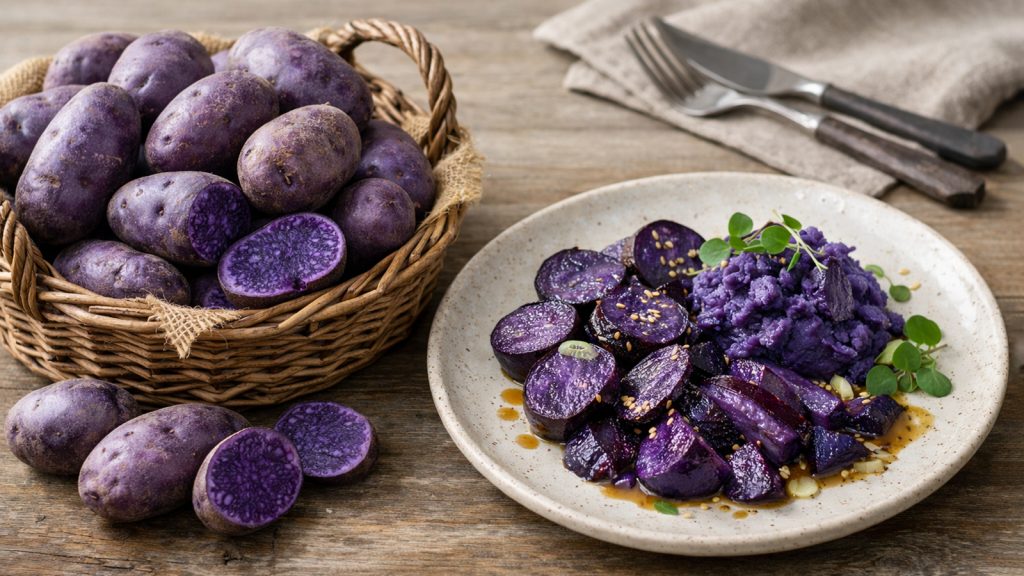
Image: Nil Taskin Digital Art
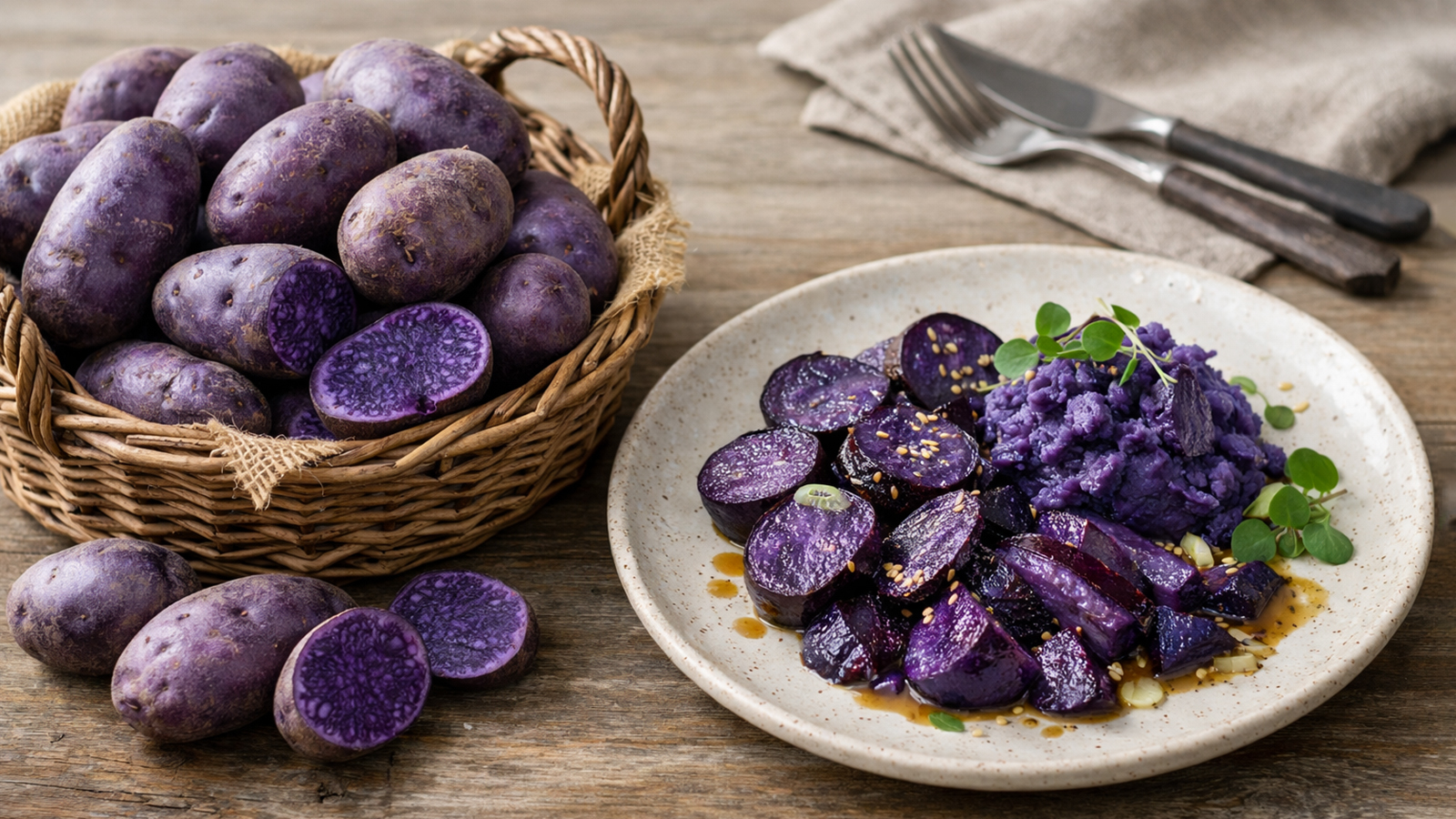
Purple potatoes are more than just a visually striking ingredient. Their deep purple color comes from naturally occurring anthocyanins—powerful antioxidant compounds that have drawn increasing attention in nutrition and longevity research. Long valued in traditional cuisines from South America to Okinawa, purple potatoes are now being rediscovered as a functional food that combines familiar comfort with measurable health benefits. This article takes a closer look at what makes purple potatoes different, from their varieties and nutritional profile to their role in health-focused kitchens around the world.
Purple potatoes are a variety of potato with purple skin and/or purple flesh, rich in natural pigments—especially anthocyanins. Their color is genetic, not the result of dyes or external factors. In terms of taste, they are similar to conventional potatoes but are often described as having a slightly more earthy flavor and a denser aroma.
How Many Varieties Are There?
Purple potatoes are not a single type; they include several main varieties grown in different regions:
– Purple skin – purple flesh
– Purple skin – light-colored (white/cream) flesh
– Purple varieties from the sweet potato family (technically not true potatoes, but a different species)
Well-known examples include:
– Purple Majesty
– Vitelotte (French origin, very dark purple)
– Peruvian Purple (native to the Andes)
– Okinawan Purple (purple sweet potato)
Are There Differences in Health Benefits Between Varieties?
Yes. As color intensity increases, health benefits tend to increase as well.
– Deep purple flesh → Higher anthocyanin content
– Light-colored flesh → Lower antioxidant levels
– Purple sweet potatoes → Higher fiber content and different polyphenols
From a health perspective, deep purple–fleshed varieties are generally the most potent.
Nutritional Value (per 100 g, approx.)
– Calories: 70–80 kcal
– Carbohydrates: ~17 g
– Fiber: 2–3 g
– Protein: ~2 g
– Fat: Very low
– Vitamin C: Moderate
– Potassium: High
– Anthocyanins: Very high (significantly higher than white/yellow potatoes)
Compared to white or yellow potatoes, their antioxidant capacity is markedly higher.
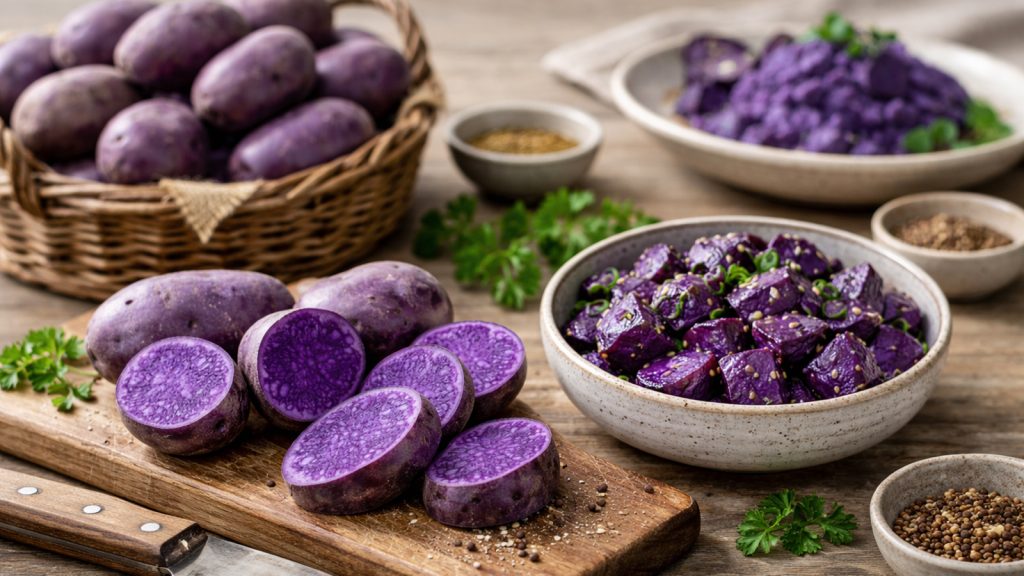
Image: Nil Taskin Digital Art
Health Benefits
1. Powerful antioxidant effect
Anthocyanins neutralize free radicals and help protect against cellular aging.
2. Cardiovascular health
Some studies suggest that consuming purple potatoes may help lower blood pressure.
3. Gut health
The combination of fiber and polyphenols supports beneficial gut bacteria.
4. Blood sugar regulation
Their glycemic impact is slightly lower than that of conventional potatoes, especially when boiled and cooled.
5. Brain and cognitive support
Anthocyanins may help reduce oxidative stress in brain tissue.
Which Cuisines Commonly Use Purple Potatoes?
– South America (Peru, Bolivia): A traditional staple
– France: Gourmet cuisine, particularly Vitelotte
– Japan (Okinawa): Purple sweet potatoes are widely consumed (Okinawa is long known as one of the world’s longest-living populations).
– United States & Europe: Increasingly popular as a “functional food”
– Modern chef-driven kitchens: Used for purées, roasting, chips, and visual presentation
Cooking Tips
– Boiling or steaming → Minimizes antioxidant loss
– Baking/roasting → Enhances flavor intensity
– Frying → Reduces some of the health benefits
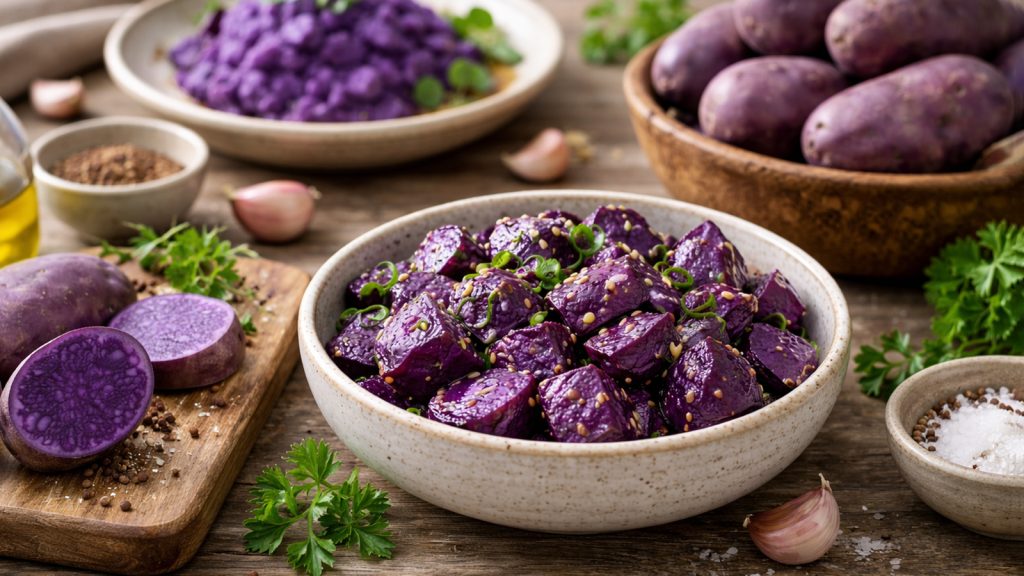
Image: Nil Taskin Digital Art
Frequently Asked Questions About Purple Potatoes
Are Purple Potatoes Healthier?
Purple potatoes are generally considered healthier than white or yellow potatoes due to their high content of anthocyanins, powerful antioxidants also found in blueberries and red cabbage. While their calorie and carbohydrate content is similar to regular potatoes, purple potatoes offer significantly higher antioxidant capacity, which may support cardiovascular health, reduce inflammation, and protect cells from oxidative stress.
What Is a Purple Potato Called?
Purple potatoes go by several names depending on the variety and region. Common names include Purple Majesty, Vitelotte, Peruvian Purple, and Okinawan Purple (the latter being a purple sweet potato). There is no single universal name; “purple potato” is an umbrella term covering multiple varieties.
Do Purple Potatoes Taste Different?
Purple potatoes taste similar to regular potatoes, but many people describe them as slightly more earthy, nutty, or dense in texture. The flavor difference is subtle, not dramatic. Their texture often holds up well in roasting, boiling, and puréeing.
Where Can I Find Purple Potatoes?
Purple potatoes can be found in:
– Well-stocked supermarkets
– Organic or health food stores
– Farmers’ markets
– Specialty produce shops
Where Are Purple Potatoes Grown?
Purple potatoes are grown in several regions around the world:
– South America (especially Peru and Bolivia, their original homeland)
– North America (United States, particularly California and Colorado)
– Europe (France, Italy, the Netherlands)
– Asia (Japan, especially Okinawa, mainly for purple sweet potatoes)
Nil Taskin