



The Myths Don’t Hold Up: How Ultra-Wealthy Men Actually Choose Their Partners

Image: Michael Dell X account video
Contrary to popular belief, rising wealth doesn’t increase the likelihood of choosing a much younger partner. What grows instead is the desire for stability, trust, and age alignment. The private lives of billionaires reveal a pattern that neatly matches the data.
“The richer a man is, the less likely he is to marry a significantly younger woman.”
A statistic that cuts directly against one of the most persistent cultural clichés.
For decades, the idea that “rich men choose young women” has circulated as if it were a universal truth. Yet when we look at empirical research and sociological patterns—especially among billionaires—the picture is very different. Age compatibility, emotional steadiness, shared values, and trust consistently outweigh youth and physical appearance. Michael Dell and many other ultra-wealthy figures illustrate just how inaccurate the stereotype actually is.
Michael Dell: A Case That Breaks the Internet’s Favorite Narrative
Michael Dell (born 1965) is often cited for his remarkable self-made rise—assembling computers in his college dorm room before building a $150+ billion fortune. But his private life contradicts one of the most persistent online tropes.
In 1988, Dell met Susan Lieberman Dell (born 1958). They married in 1989.
Susan is seven years older than Michael, comes from a well-educated Texas family, and the couple has four children. – x
His relationship isn’t an anomaly; it fits a broader trend among the ultra-rich.
Other Billionaires Who Married Older or Age-Peer Partners
1. Warren Buffett & Susan Thompson Buffett
Buffett (born 1930) was younger than Susan by about two years. She played a major intellectual and moral role throughout his life and philanthropy.
2. George Soros & Susan Weber
Soros (born 1930) married Weber in 1983—he was 53, she was 43. Their marriage is often referenced in academia as an example of “intellectual parity.”
3. Ingvar Kamprad (IKEA) & Margaretha Stennert
Kamprad (born 1926) was slightly younger than Margaretha. Their long partnership is a classic case of “status alignment” in high-trust relationships.
4. Marc Benioff (Salesforce) & Lynn Benioff
Benioff (born 1964) is two years younger than Lynn. Their philanthropic work is frequently cited as a model of “shared social capital.”
5. Ted Turner & Jane Fonda
Turner (born 1938) was younger than Fonda. Their relationship appears in sociological discussions about status symmetry.
6. Richard Branson & Joan Templeman
Branson (born 1950) married Templeman when she was in her early 40s and five years older than he was. He has repeatedly credited her for the emotional stability behind his success.
These examples are far from rare. Among the world’s wealthiest men, partnerships with peers or older women are common—and often foundational.

Image: Michael Dell X account video
Why This Happens: A Sociological and Analytical Breakdown
1. Wealth Increases the Desire for Relationship Stability
For high-net-worth men, partner selection prioritizes trust, loyalty, emotional maturity, and long-term compatibility. As wealth grows, so do the risks—financial, reputational, psychological—of unstable relationships.
This naturally shifts preferences toward age-aligned, grounded partners.
2. In Elite Circles, “Value Alignment” Matters More Than Youth
In tech, finance, academia, and upper professional classes, shared worldview, intellectual compatibility, and similar life rhythms outweigh age-based preferences.
3. Younger Partners Seem More Common Because of Salience Bias
A 70-year-old billionaire dating a 25-year-old gets headlines.
A 70-year-old billionaire married to a 68-year-old does not.
What’s rare becomes disproportionately visible.
4. The “Bimbo Aesthetics” Pattern Belongs to Sudden-Wealth, Not Ultra-Wealth
Flashy displays and much-younger partners are strongly associated with “new money” personalities—people seeking validation or visibility.
Self-made billionaires typically prioritize privacy, risk reduction, and shared social values.
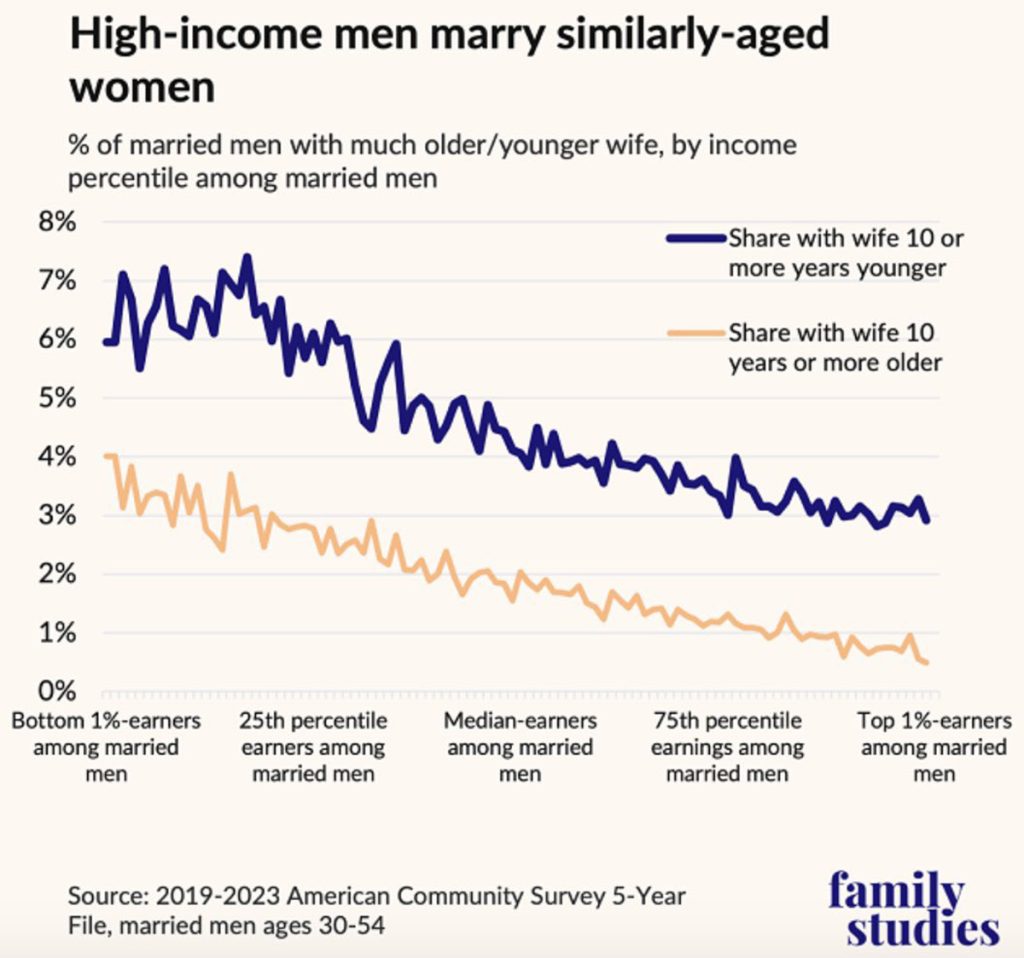
5. The Data Speaks Clearly
“The richer a man is, the less likely he is to marry a significantly younger woman.”
The mechanism is simple: more wealth → more risk → more stability-seeking behavior, not age-gap maximization. – x
Conclusion
Across the uppermost tier of wealth, a consistent pattern emerges:
age alignment, stability, shared values, and emotional compatibility.
Michael Dell and Susan Dell exemplify a truth that contradicts cultural clichés but aligns perfectly with the data:
the “rich man + young woman” stereotype is not a rule—it’s an illusion amplified by rare, headline-grabbing exceptions.
Michael and Susan Dell have been in the news since yesterday after their $6.5 billion donation to support children and public programs — a meaningful and substantial act of philanthropy. Their story also highlighted how often public assumptions about ultra-wealthy couples differ from the reality.
Nil Taskin