What Is a Digital Landlord?
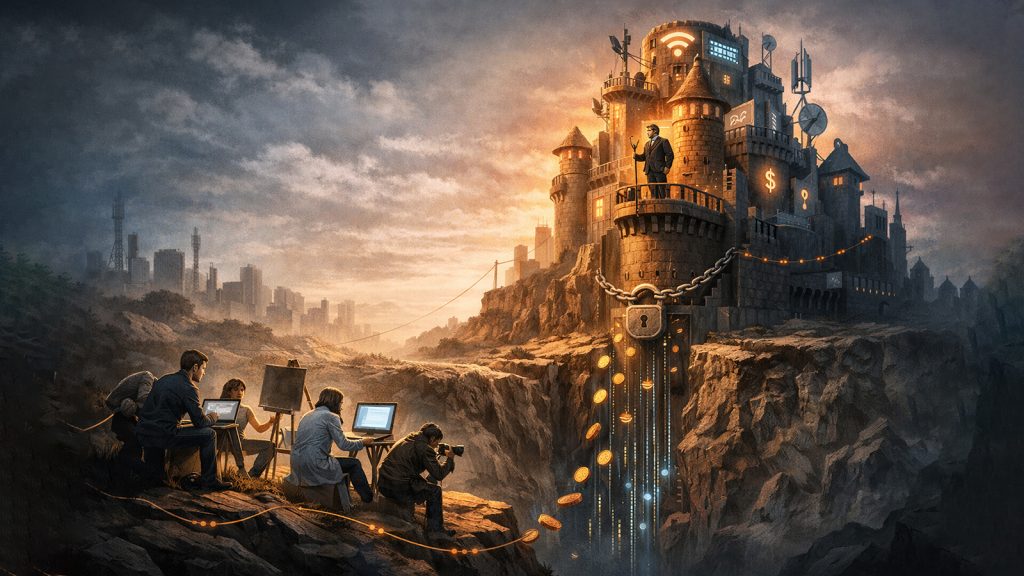
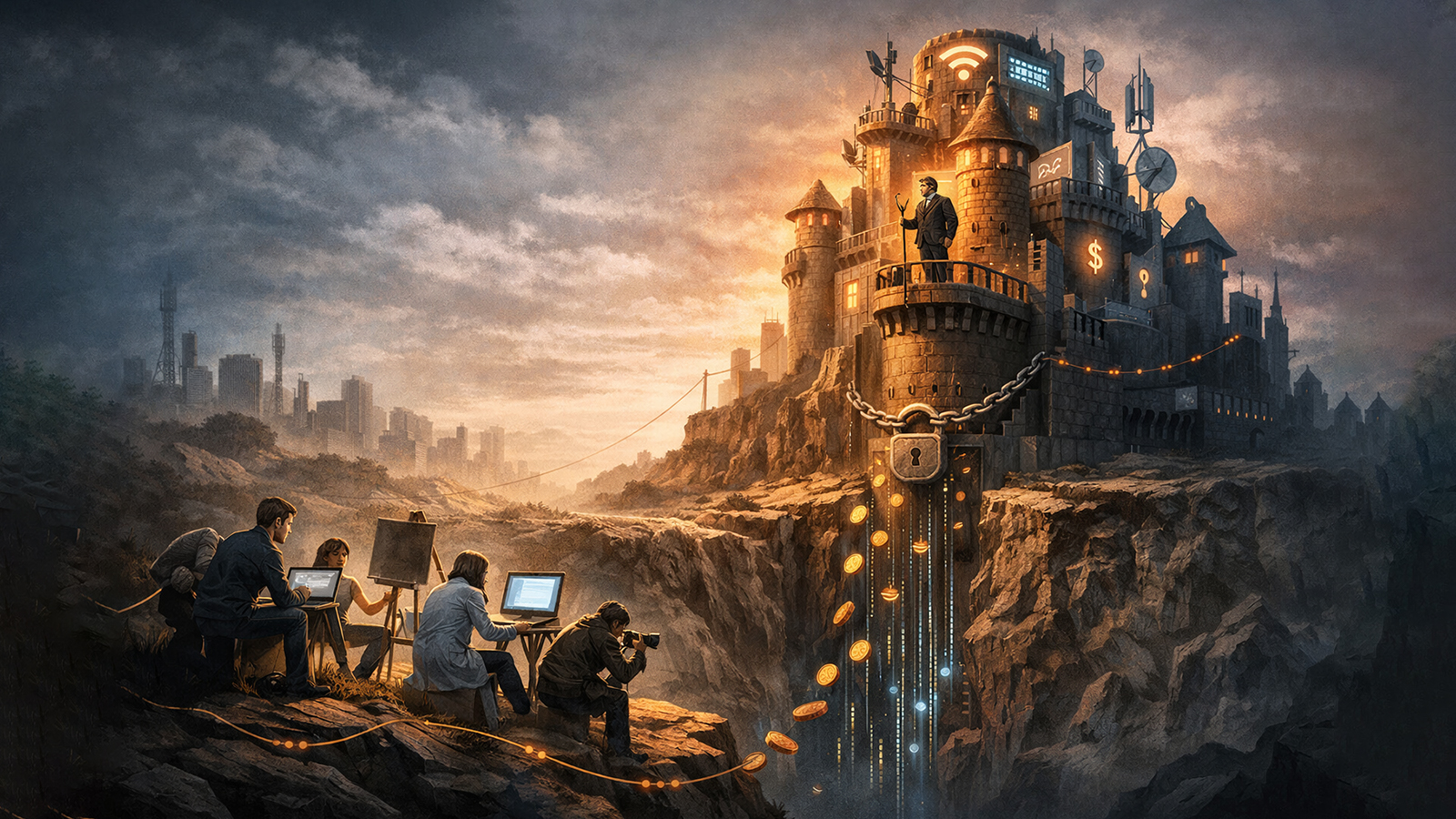
Image: Nil Taskin Digital Art
Digital production has never been easier—yet ownership has never been more unclear. Creators, sellers, and users generate value, take risks, and do the work, while platforms that own the infrastructure and distribution channels set the rules, control access, and capture most of the upside. This imbalance has given rise to what can be described as digital landlordship, a system in which those who build online increasingly operate as tenants on land they do not own.
A digital landlord is an entity that owns the infrastructure, distribution channels, or digital “land” of the internet—and in doing so, turns creators and users into tenants.
In simple terms:
– You create the content
– You do the work
– You take the risk
But someone else sets the rules, controls access, and captures most of the value.
Why Call It “Landlord”?
Because the power dynamics closely resemble feudal systems:
– Rules can be changed unilaterally
– Revenue sharing is arbitrary
– Accounts can be shut down without appeal
– Visibility can disappear overnight
– There is no meaningful authority to contest decisions
Just like in feudal societies:
> If the land is not yours, the labor is never fully yours either.
Real-World Examples
– Google / SEO
Delivers traffic—until an algorithm update makes you invisible.
– Instagram / TikTok
Visibility is granted or revoked at will.
– Amazon / Etsy
Sellers grow—but the platform owns the customer relationship and the brand equity.
– YouTube
Distributes revenue, enforces rules, and changes terms unilaterally.
> If you don’t own your space, you don’t own your freedom.
The Only Real Exit
Those who have:
– Their own website
– Their own email list
– Their own archive
– Their own brand
are no longer pure tenants—at best, they become small landowners.
> In the digital age, freedom is not about expression.
> It is about infrastructure ownership.
What Is Digital Feudalism?
Digital feudalism describes a modern system where power has shifted:
– from land to platforms,
– from lords to technology companies,
– from serfs to users and creators.
The Core Logic
– The platform is not yours
– The rules are not written by you
– The value is created by your labor
– But control belongs to someone else
Which leads to a familiar conclusion:
> You have labor, but no ownership.
Why “Feudalism”?
Because the parallels are exact:
– Algorithms function like feudal laws
– Account termination equals exile
– Visibility is granted as favor
– Income is rent distributed by the landlord
This is not a metaphor for effect.
It is a structural description of power in the digital economy.
Nil Taskin