

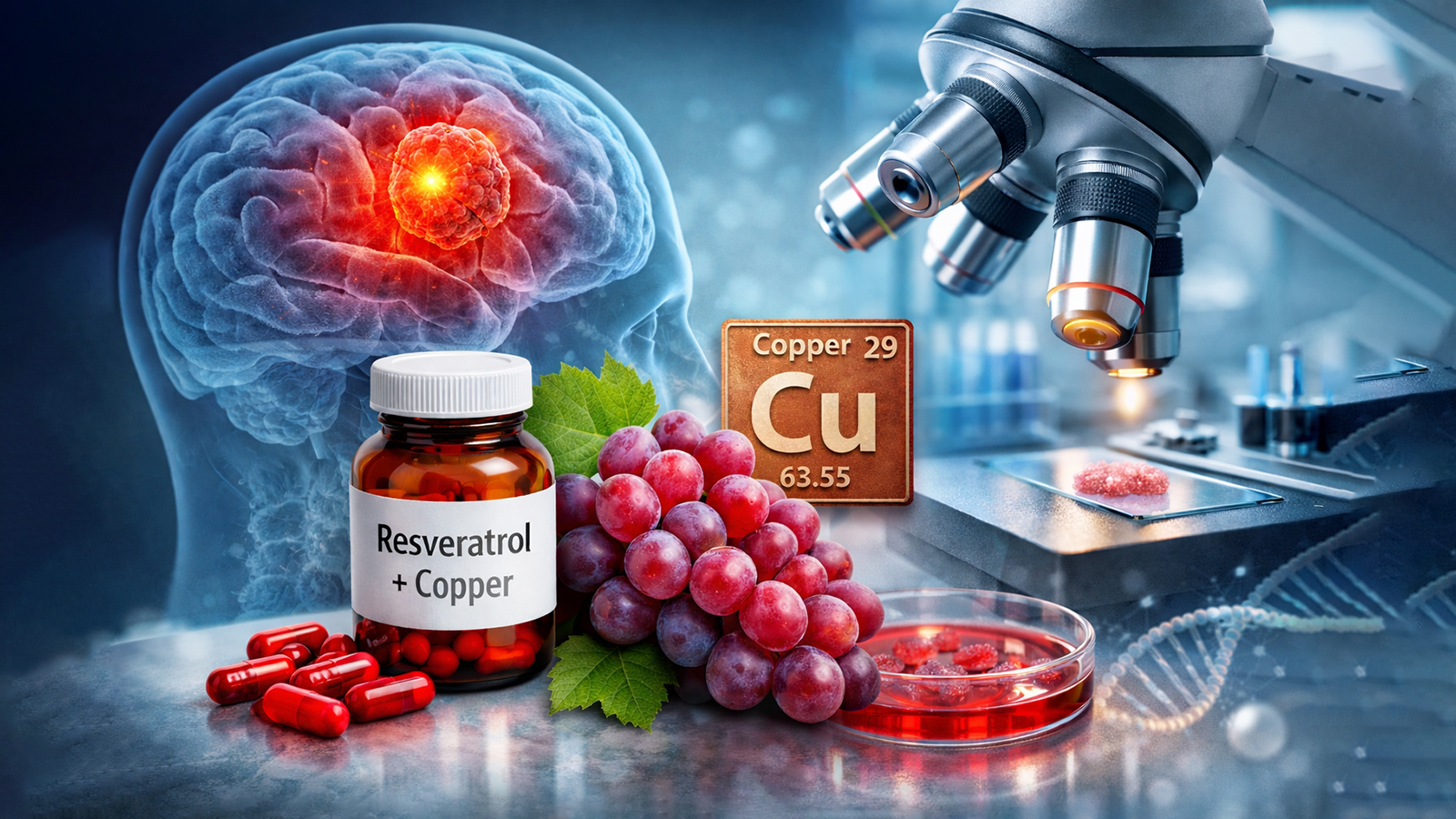
A Different Approach to Brain Cancer: Resveratrol + Copper
Image: Nil Taskin Digital Art
A small clinical study from India found that a combination of resveratrol and copper produced significant biological changes in glioblastoma tumor tissue, including reduced tumor activity and inflammation, with no reported side effects. While the findings are intriguing, researchers stress that this is an early, experimental step and not a substitute for established cancer treatments. Larger and longer trials are needed, and self-medication is strongly discouraged.
A new study suggests that a combination of resveratrol and copper, two widely available and inexpensive supplements, may show remarkable biological effects against glioblastoma, one of the deadliest forms of brain cancer. – PumMed
📍 Where was the study conducted?
At ACTREC (Advanced Center for Treatment, Research and Education in Cancer) in Mumbai, India.
📍 How many patients were involved?
20 glioblastoma patients in total.
– 10 patients received resveratrol + copper for 12 days before scheduled brain surgery
– 10 patients served as a control group and received no supplements
🔬 What did researchers observe?
In the group that received the supplements, tumor tissue showed:
- Tumor growth activity decreased by 33%
- Cancer-related biomarkers dropped by 57%
- Immune checkpoint signals were reduced by 41%
- Cancer stem-cell markers fell by 56%
- DNA fragments that promote tumor aggressiveness were almost completely eliminated
👉 No side effects were reported.
🧬 What is the proposed mechanism?
Copper enables resveratrol to generate reactive molecules that help break down harmful DNA debris released by dying cancer cells. These DNA fragments are known to fuel inflammation and make tumors more aggressive.
When combined, resveratrol appears to shift from its usual antioxidant role to a pro-oxidant effect, targeting these damaging DNA particles.
According to the researchers, this approach represents a shift in thinking — moving away from solely trying to destroy cancer cells, and instead working toward healing tumor biology.
⚠️ Important limitations and warnings
- The study involved a very small sample size
- It examined short-term biological changes only
- The supplements were tested for just 12 days
- No evidence yet that this improves survival or long-term outcomes
- It does not replace standard cancer treatments
The researchers clearly caution against self-medication.
Using supplements without medical supervision is not recommended.
The observed effects may depend on the specific controlled formulation used in the study.
The American Cancer Society also warns that dietary supplements have no proven anti-cancer benefit, may interfere with treatments, and can carry safety risks.
Nil Taskin